
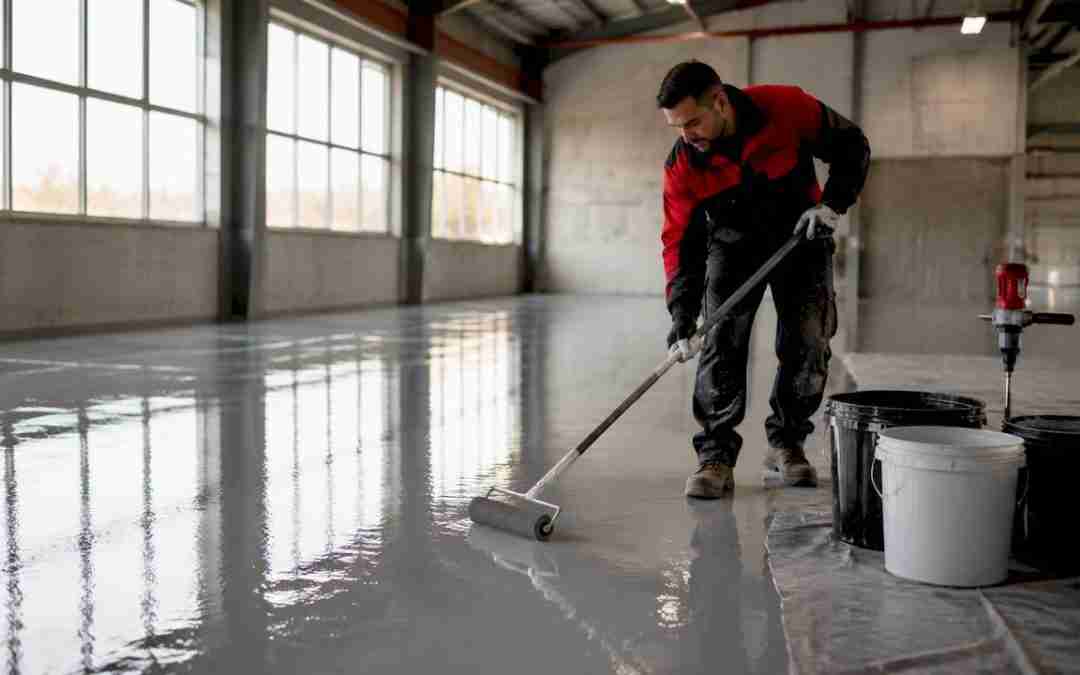
Commercial epoxy flooring is defined as a multi-layer resin system applied over concrete to create a durable, chemical-resistant, and often decorative surface for business environments. The best examples of commercial epoxy include epoxy mortar, self-leveling epoxy, quartz-filled, metallic, and flake systems. Each type is engineered for a specific combination of traffic load, chemical exposure, and aesthetic demand. Property managers who understand these distinctions make better purchasing decisions and avoid costly system failures. This guide breaks down every major type with real-world applications so you can match the right system to your facility.
1. What are examples of commercial epoxy flooring systems?
Commercial epoxy flooring covers five primary system types, and each one solves a different problem. The five main types are epoxy mortar, self-leveling epoxy, quartz-filled epoxy, metallic epoxy, and flake (chip) epoxy. Understanding which system fits your space starts with knowing what each one is built to handle.
Professional installers do not think in terms of a single epoxy layer. Commercial epoxy systems are specified as multi-layer builds that include primer coats, broadcast aggregate layers, epoxy resin layers, and polyurethane topcoats. That layered assembly is what delivers the performance and finish you see in high-traffic commercial spaces.
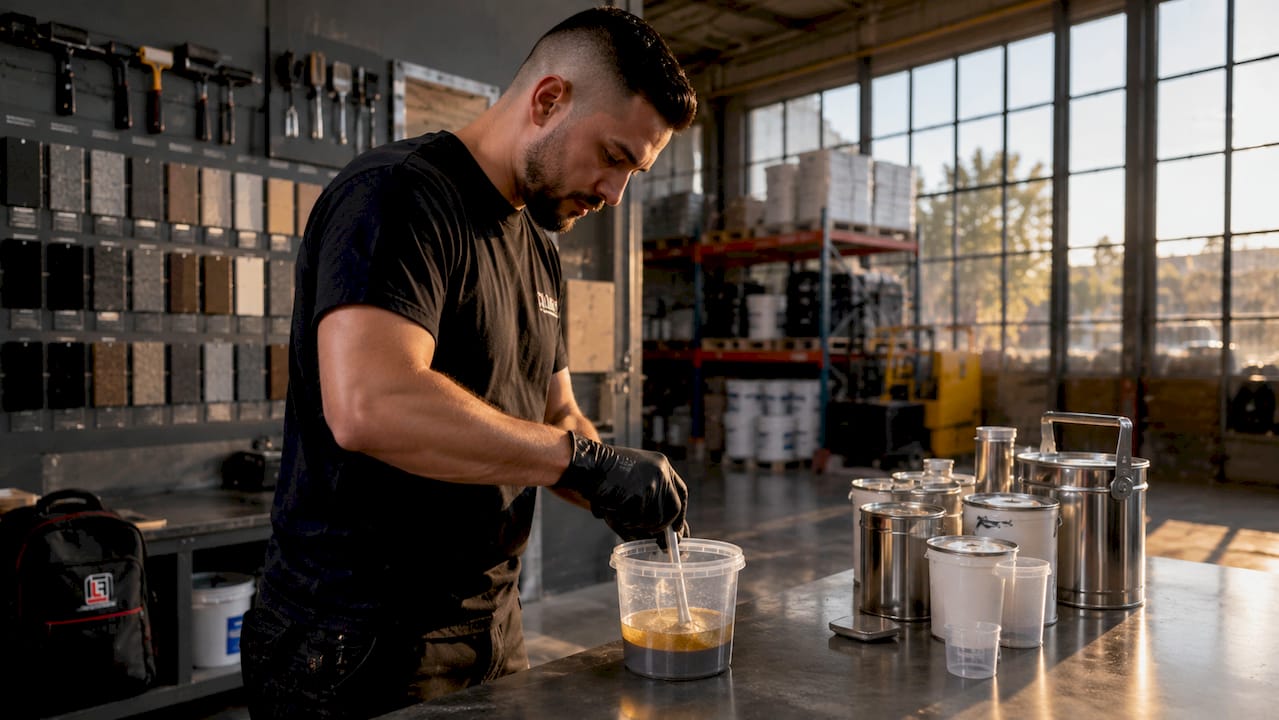
The right system depends on three factors: traffic load, chemical exposure, and aesthetic requirements. A warehouse loading dock and a hotel lobby both use epoxy, but they require completely different builds.
2. What are epoxy mortar systems and when are they used?
Epoxy mortar is the heaviest-duty commercial epoxy system available. Epoxy mortar systems are 1/4 to 1/2 inch thick and built to absorb forklift impact, heavy point loads, and thermal shock. No other epoxy system comes close to that level of physical resilience.
This system is made by combining epoxy resin with a graded aggregate, typically quartz or sand, to create a trowel-applied mortar layer. The result is a floor that can take the kind of abuse that would crack or delaminate thinner coatings within months. Industries that rely on epoxy mortar include:
- Warehouses and distribution centers with heavy forklift traffic
- Manufacturing plants with dropped equipment and impact loads
- Chemical processing facilities where spills and thermal cycling occur
- Commercial kitchens with hot equipment, grease, and cleaning chemicals
- Cold storage and freezer rooms where temperature swings stress the slab
The thickness also allows installers to level uneven or damaged concrete slabs during application. That is a practical bonus for older commercial properties where the slab has deteriorated.
Pro Tip: If your facility runs forklifts, uses steam cleaning, or handles corrosive chemicals, specify epoxy mortar as your base system. Thinner coatings will fail under those conditions regardless of brand or price.
3. How do self-leveling epoxy flooring systems serve commercial spaces?
Self-leveling epoxy is the most widely installed commercial epoxy system. It flows across the concrete surface and settles into a smooth, flat, seamless finish at approximately 1/8 inch thick. That seamless surface is the key advantage: no joints or grout lines means no places for bacteria, moisture, or debris to collect.
Self-leveling epoxy installation costs approximately $7–$14 per square foot for standard commercial applications. Decorative metallic or multi-color versions run $8–$20 per square foot depending on surface prep and project scope. Those numbers reflect the full system cost, not just materials.
Common commercial applications for self-leveling epoxy include:
- Retail stores and showrooms that need a clean, polished look
- Healthcare facilities where hygiene and easy cleaning are non-negotiable
- Commercial kitchens with moderate traffic and sanitation requirements
- Warehouses with light-to-medium forklift and pallet jack use
- Office buildings and lobbies that want a modern, low-maintenance floor
Curing time matters for business continuity. Most commercial epoxy coatings allow light foot traffic after 12–24 hours and heavier vehicle traffic after 24–72 hours. Full chemical cure takes approximately 7 days. Plan your installation around those windows to minimize downtime.
| System Feature | Self-Leveling Epoxy |
|---|---|
| Typical thickness | ~1/8 inch |
| Cost range | $7–$20 per sq ft |
| Light foot traffic | 12–24 hours after install |
| Vehicle traffic | 24–72 hours after install |
| Full cure | ~7 days |
Pro Tip: Schedule self-leveling epoxy installation over a weekend or during a planned shutdown. You can reopen for foot traffic Monday morning and reach full vehicle load capacity by midweek.
4. What decorative commercial epoxy flooring examples exist?
Decorative epoxy systems prove that commercial floors do not have to choose between performance and appearance. Decorative epoxy options include quartz aggregate broadcast, decorative vinyl flake systems, and metallic epoxy, each offering a distinct visual result alongside real durability.
Quartz-filled epoxy
Quartz-filled epoxy combines epoxy resin with colored quartz aggregate broadcast into the surface. The result looks like natural stone and delivers excellent slip resistance and abrasion resistance. It is the standard choice for commercial restrooms, locker rooms, school corridors, and food service areas where both safety and hygiene matter. Quartz-filled systems also work well as decorative flooring options with moisture tolerance built into the formulation.
Metallic epoxy
Metallic epoxy uses metallic pigments suspended in the resin to create a three-dimensional, flowing visual effect. No two metallic floors look identical. This system is popular in upscale retail, hotel lobbies, restaurant dining rooms, and automotive showrooms where the floor is part of the brand experience. The visual impact is high, and the surface is still durable enough for moderate commercial foot traffic.
Flake (chip) epoxy
Flake systems broadcast colored vinyl chips into a wet epoxy base coat, then seal with a clear topcoat. The chips add texture, which improves slip resistance. They also hide minor surface imperfections and scuffs better than solid-color systems. Automotive dealerships, fitness centers, and commercial garages use flake epoxy because it looks sharp and holds up to daily wear.
| Decorative System | Best Setting | Key Benefit |
|---|---|---|
| Quartz-filled | Restrooms, schools, food service | Slip resistance, stone look |
| Metallic | Lobbies, showrooms, restaurants | High-end visual impact |
| Flake (chip) | Garages, gyms, dealerships | Texture, hides wear |
5. Which specialized epoxy types address specific commercial needs?
Some commercial environments require epoxy systems engineered for a single critical performance factor. Standard self-leveling or mortar systems will not meet those requirements. Zoning commercial floors by area hazard, such as forklift aisles, loading docks, battery charging stations, and restrooms, is the professional approach to handling multiple demands within one facility.
Here are the specialized systems that address those demands:
- Anti-static (ESD) epoxy: Electronics manufacturing plants, data centers, and server rooms require floors that dissipate static electricity. ESD epoxy contains conductive materials that prevent static buildup, protecting sensitive equipment and personnel.
- Moisture-tolerant quartz epoxy: Slabs on grade are prone to vapor emission, which causes standard epoxy to blister and delaminate. Moisture-tolerant epoxy quartz systems address vapor pressure directly, preventing bond failure and reducing the need for extensive moisture testing before installation.
- Chemical-resistant epoxy: Pharmaceutical plants, laboratories, and industrial facilities handling acids or solvents need epoxy formulations with high chemical resistance ratings. These systems use novolac epoxy resins that outperform standard epoxy under prolonged chemical exposure.
- Antimicrobial self-leveling epoxy: Food processing and hygiene-critical areas use seamless antimicrobial epoxy floors to form joint-free surfaces that reduce contamination risk. Healthcare facilities specify the same systems for operating rooms and sterile corridors.
- Zoned epoxy applications: A single large commercial facility often needs multiple systems. Forklift lanes get epoxy mortar. Office areas get self-leveling. Battery charging zones get chemical-resistant formulations. Combining decorative and performance systems by zone is the most cost-effective way to meet multiple commercial needs in one building.
Pro Tip: Before specifying any epoxy system for a slab-on-grade installation, conduct a calcium chloride or relative humidity test. Moisture readings above the manufacturer’s threshold will void the warranty and cause premature failure regardless of system quality.
Key takeaways
Matching epoxy system type to traffic load, chemical exposure, and aesthetic need is the single most important decision in any commercial epoxy flooring project.
| Point | Details |
|---|---|
| System build matters most | Commercial epoxy is a multi-layer assembly, not a single coat. Specify by system, not just product. |
| Epoxy mortar for heavy abuse | Use 1/4–1/2 inch mortar systems where forklifts, impact, or thermal shock are present. |
| Self-leveling for moderate demand | Self-leveling epoxy at ~1/8 inch suits retail, healthcare, and light warehouse use at $7–$20 per sq ft. |
| Decorative options are durable | Quartz, metallic, and flake systems deliver aesthetics without sacrificing commercial-grade performance. |
| Zone floors for complex facilities | Assign different epoxy systems to different areas based on specific hazards and traffic patterns. |
What I have learned specifying epoxy floors for commercial properties
After years of working on commercial flooring projects across the Denver metro, the most common mistake I see is property managers selecting an epoxy system based on price per square foot rather than system build. A thin decorative coating in a warehouse aisle will fail within a year. An overbuilt mortar system in a retail lobby wastes budget that could go toward a better finish.
The second mistake is treating an entire facility as one zone. A distribution center has loading docks, forklift aisles, office areas, and restrooms. Each of those spaces has a different traffic profile and chemical exposure level. Specifying one system for all of them is a compromise that serves none of them well.
Moisture is the issue that surprises people most. Denver’s Front Range has variable soil conditions, and slab-on-grade moisture can be unpredictable. I have seen beautiful epoxy installations fail within months because no one tested vapor emission before the pour. That test costs almost nothing compared to a full reinstall.
My honest recommendation: work with an installer who asks about your operations before quoting a system. If the first question is “how many square feet?” rather than “what happens on this floor every day?”, that is a warning sign. The right system specification protects your investment for 10 to 20 years. The wrong one costs you twice.
— Jim
Get the right commercial epoxy system installed by Leonardosflooringcorp
Leonardosflooringcorp has installed commercial epoxy flooring across the Denver metro for over 10 years, handling everything from heavy-duty warehouse mortar systems to decorative metallic finishes for retail and hospitality spaces. Every project starts with a conversation about your operations, traffic load, and budget before a single system is specified.
Whether you need a chemical-resistant floor for a food processing facility or a high-gloss decorative finish for a showroom, Leonardosflooringcorp brings the right system and the right installation to every job. Explore our commercial epoxy coating services or contact us directly for a project-specific quote. No guesswork, no cookie-cutter solutions.
FAQ
What is commercial epoxy flooring?
Commercial epoxy flooring is a multi-layer resin system applied over concrete to create a durable, chemical-resistant surface for business environments. It includes systems like epoxy mortar, self-leveling epoxy, quartz-filled, metallic, and flake coatings.
How long does commercial epoxy take to cure?
Light foot traffic is typically possible after 12–24 hours. Heavier vehicle traffic requires 24–72 hours, and full chemical cure takes approximately 7 days depending on the system and ambient conditions.
What is the cost of commercial epoxy flooring?
Self-leveling epoxy runs approximately $7–$14 per square foot for standard commercial installations. Decorative systems like metallic or multi-color epoxy cost $8–$20 per square foot based on surface prep and project scope.
Which epoxy system is best for a warehouse?
Epoxy mortar at 1/4 to 1/2 inch thickness is the correct choice for warehouses with forklift traffic, heavy loads, or thermal shock exposure. Self-leveling epoxy suits lighter warehouse use where a smooth, easy-to-clean surface is the priority.
Can one facility use multiple epoxy systems?
Yes. Zoning floors by area hazard is standard practice for large commercial properties. Forklift lanes, loading docks, office areas, and restrooms each have different demands and benefit from tailored epoxy formulations per zone.